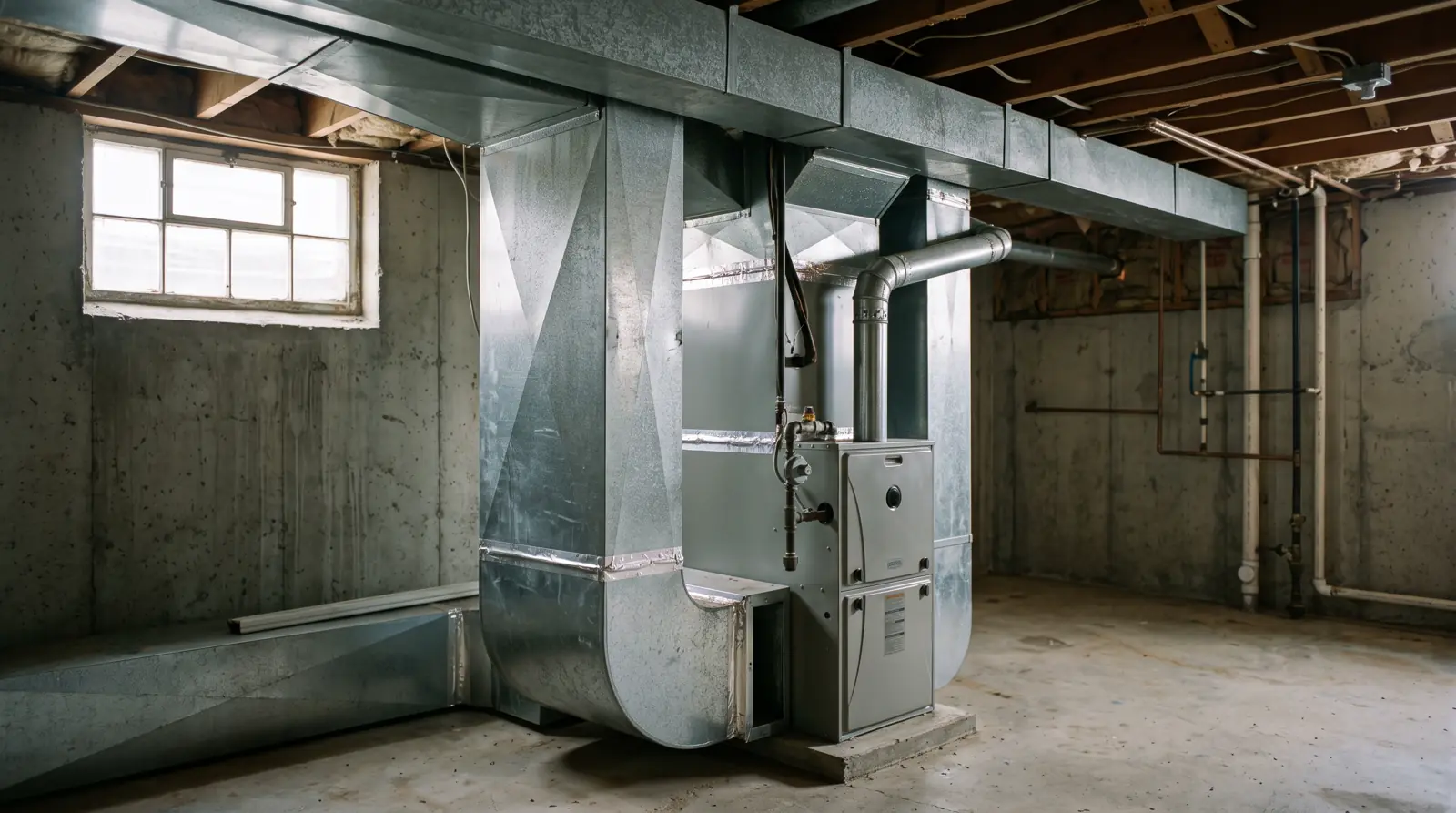
Gas Appliance Bans by State: Where New Buildings Must Go Electric and Where Bans Are Prohibited (2026)
- Primary data
- State statutes and session laws (27 states plus New York), court opinions, air district rules; Census Vintage 2025 population
- Data period
- Laws enacted 2020 to 2025; legal status as of 2026-11-02; population July 1, 2025
- Latest release used
- 2026-11-02
- Next release
- Recheck by 2027-02-01, or sooner after a Supreme Court filing in the New York case
- Geography
- 50 states and DC; selected cities, counties and air districts
- Sources
- 35 (24 Tier 1)
As of November 2, 2026, 27 states have laws that stop local governments from banning gas service or appliances, and New York is the only state with a statewide all-electric law for new buildings, our registry of gas appliance bans by state finds. Those 27 states hold 48.1% of US residents (Census 2025).
State gas law registry
Checked Checked in full for this edition; to be rechecked at least every three months and after major court rulings. Last checked 2026-11-02. Entries are neutral records of public data; each links to its source record.
| State | Law coded from official text | Date | Evidence | Source |
|---|---|---|---|---|
| Alabama | Bars local gas or energy-source bans. HB 446 (2021 Reg. Sess.); SB 50 (2024 Reg. Sess.); Enrolled HB 446 (2021); enrolled SB 50 (2024). Confidence: interpretation needed | 2026-11-02 | corroborated | Record |
| Arizona | Bars local gas or energy-source bans. Laws 2020, ch. 3 (HB 2686); A.R.S. 9-810; A.R.S. 11-867 (plus 9-467, 11-321). Confidence: clear text | 2026-11-02 | agency record | Record |
| Arkansas | Bars local gas or energy-source bans. Act 308 of 2021 (SB 137); Ark. Code 14-1-104. Confidence: clear text | 2026-11-02 | agency record | Record |
| Florida | Bars local gas or energy-source bans. ch. 2021-150, Laws of Fla.; Fla. Stat. 366.032. Confidence: clear text | 2026-11-02 | agency record | Record |
| Georgia | Bars local gas or energy-source bans. Act 254 (HB 150), 2021; O.C.G.A. 46-1-6. Confidence: interpretation needed | 2026-11-02 | corroborated | Record |
| Idaho | Bars local gas or energy-source bans. 2023 Idaho Sess. Laws ch. 55 (HB 106); Idaho Code 50-346. Confidence: clear text | 2026-11-02 | agency record | Record |
| Indiana | Bars local gas or energy-source bans. HEA 1191 (2021), reported as P.L. 180-2021; Not confirmed (official text could not be opened). Confidence: interpretation needed | 2026-11-02 | corroborated | Record |
| Iowa | Bars local gas or energy-source bans. 2021 Iowa Acts (HF 555 vehicle); Iowa Code 364.3(13). Confidence: clear text | 2026-11-02 | agency record | Record |
| Kansas | Bars local gas or energy-source bans. L. 2021, ch. 26 (SB 24); K.S.A. 66-1288 (Kansas energy choice act). Confidence: clear text | 2026-11-02 | agency record | Record |
| Kentucky | Bars local gas or energy-source bans. 2021 Ky. Acts ch. 120 (HB 207); KRS 65.113. Confidence: clear text | 2026-11-02 | agency record | Record |
| Louisiana | Bars local gas or energy-source bans. Act 46 of 2020 (SB 492); La. R.S. 40:1730.21.1. Confidence: clear text | 2026-11-02 | agency record | Record |
| Maine | Bars local gas or energy-source bans. P.L. 2025, ch. 456 (LD 556); 30-A M.R.S. 3015. Confidence: clear text | 2026-11-02 | agency record | Record |
| Mississippi | Bars local gas or energy-source bans. HB 632 (2021), All Fuels Act of 2021; Miss. Laws 2021, HB 632 (codified section not identified). Confidence: clear text | 2026-11-02 | agency record | Record |
| Missouri | Bars local gas or energy-source bans. L. 2021 H.B. 734 merged with S.B. 44; RSMo 67.309. Confidence: clear text | 2026-11-02 | agency record | Record |
| Montana | Bars local gas or energy-source bans. Ch. 435, L. 2023; MCA 7-1-117. Confidence: clear text | 2026-11-02 | agency record | Record |
| Nebraska | Bars local gas or energy-source bans. Laws 2024, LB 867, sec. 12; Neb. Rev. Stat. 13-407. Confidence: clear text | 2026-11-02 | agency record | Record |
| New Hampshire | Bars local gas or energy-source bans. 2022 N.H. Laws 242:1 and 311:6 (per source note); RSA 155-A:3. Confidence: interpretation needed | 2026-11-02 | corroborated | Record |
| New York | Statewide all-electric law for new buildings. All-Electric Buildings Act (FY2024 budget, 2023); N.Y. Energy Law 11-104(6) to (8); Exec. Law 378. Confidence: interpretation needed | 2026-11-02 | corroborated | Record |
| North Carolina | Bars local gas or energy-source bans. S.L. 2023-58 (HB 130); G.S. 153A-145.11 (counties); parallel city section. Confidence: clear text | 2026-11-02 | agency record | Record |
| North Dakota | Bars local gas or energy-source bans. HB 1234 (2023); New sections in N.D.C.C. ch. 11-10 and ch. 40-01. Confidence: clear text | 2026-11-02 | agency record | Record |
| Ohio | Bars local gas or energy-source bans. HB 201, 134th General Assembly; Ohio Rev. Code 4933.41(C). Confidence: clear text | 2026-11-02 | agency record | Record |
| Oklahoma | Bars local gas or energy-source bans. Laws 2020, c. 52; 11 O.S. 14-107(E). Confidence: clear text | 2026-11-02 | agency record | Record |
| South Dakota | Bars local gas or energy-source bans. SL 2023, ch. 20; SDCL 6-1-24. Confidence: clear text | 2026-11-02 | agency record | Record |
| Tennessee | Bars local gas or energy-source bans. Pub. Ch. 1100 (SB 2077), 2022; Tenn. Code Ann. 7-51-2201 to 7-51-2203. Confidence: clear text | 2026-11-02 | agency record | Record |
| Texas | Bars local gas or energy-source bans. HB 17, 87th Leg. (2021); Tex. Util. Code 181.903. Confidence: clear text | 2026-11-02 | agency record | Record |
| Utah | Bars local gas or energy-source bans. Laws of Utah 2021, ch. 15 (HB 17); Utah Code 10-9a-530; 17-27a-526 (as enacted). Confidence: clear text | 2026-11-02 | agency record | Record |
| West Virginia | Bars local gas or energy-source bans. HB 2842 (2021); W. Va. Code 8-12-23. Confidence: clear text | 2026-11-02 | agency record | Record |
| Wyoming | Bars local gas or energy-source bans. Enrolled Act 70 (SF 152), 2021; W.S. 15-1-132; W.S. 18-2-116. Confidence: clear text | 2026-11-02 | agency record | Record |
Gas appliance bans by state: 27 states ban the bans, one state has its own
The national map is lopsided. Far more Americans live under a state law protecting gas hookups than under any state requirement to build all-electric.
Preemption law (also called an energy choice law): A state statute that stops cities, counties or other local bodies from banning or restricting a utility hookup, an energy source or, in some states, an appliance, based on the type of fuel. It does not require anyone to use gas.
All-electric law: A rule that bars fossil-fuel equipment (gas, propane or oil furnaces, boilers, water heaters, stoves) in new buildings. It does not reach existing buildings or the repair of existing equipment unless it says so.
We coded 27 states as having a preemption law on 2026-11-02, each from the statute, session law or enrolled bill on the legislature's own site (Tier 1). Arizona, Louisiana and Oklahoma acted first, in 2020. Texas (Utilities Code 181.903) and Florida (Fla. Stat. 366.032) are the largest by population.
Only New York has a statewide all-electric law, the All-Electric Buildings Act in Energy Law 11-104. That leaves 23 jurisdictions, including California, Washington, Massachusetts and DC, with neither kind of state law; several of them have local or regional rules covered below.
3 = statewide all-electric law for new buildings (New York); 2 = state law bars local gas bans; 1 = neither
Source: HVAC Business Brokers Research Desk registry of state statutes, checked 2026-11-02
Millions of residents
Source: U.S. Census Bureau Vintage 2025 estimates; HVAC Business Brokers Research Desk registry
| Group | Jurisdictions | Population 2025 | Share (%) |
|---|---|---|---|
| Preemption law (state bars local gas or energy-source bans) | 27 | 164,233,225 | 48.1 |
| Statewide all-electric law for new buildings (New York, enforcement suspended pending appeal window) | 1 | 20,002,427 | 5.9 |
| Neither | 23 | 157,549,205 | 46.1 |
| Total, 50 states plus DC | 51 | 341,784,857 | 100.0 |
Census Vintage 2025 resident population estimates for July 1, 2025.
Source: [1] U.S. Census Bureau
For a furnace and boiler business, the split means the legal risk to gas equipment sales sits in a small number of places, mainly New York, a handful of cities and the Bay Area air district, rather than across whole regions.
Every state and DC, with the law and how sure we are
Each row carries the citation, the year enacted, the date checked and a confidence field. 'Not found' rows are listed in excluded.md with what was searched.
Show all 51 rows
| State | Status | Citation | Year enacted | Confidence | Population 2025 |
|---|---|---|---|---|---|
| Alabama | preemption | Enrolled HB 446 (2021); enrolled SB 50 (2024) | 2021 | interpretation needed | 5,193,088 |
| Alaska | neither | not found | not found | 737,270 | |
| Arizona | preemption | A.R.S. 9-810; A.R.S. 11-867 (plus 9-467, 11-321) | 2020 | clear text | 7,623,818 |
| Arkansas | preemption | Ark. Code 14-1-104 | 2021 | clear text | 3,114,791 |
| California | neither | not found | not found | 39,355,309 | |
| Colorado | neither | not found | not found | 6,012,561 | |
| Connecticut | neither | not found | not found | 3,688,496 | |
| Delaware | neither | not found | not found | 1,059,952 | |
| District of Columbia | neither | not found | not found | 693,645 | |
| Florida | preemption | Fla. Stat. 366.032 | 2021 | clear text | 23,462,518 |
| Georgia | preemption | O.C.G.A. 46-1-6 | 2021 | interpretation needed | 11,302,748 |
| Hawaii | neither | not found | not found | 1,432,820 | |
| Idaho | preemption | Idaho Code 50-346 | 2023 | clear text | 2,029,733 |
| Illinois | neither | not found | not found | 12,719,141 | |
| Indiana | preemption | Not confirmed (official text could not be opened) | 2021 | interpretation needed | 6,973,333 |
| Iowa | preemption | Iowa Code 364.3(13) | 2021 | clear text | 3,238,387 |
| Kansas | preemption | K.S.A. 66-1288 (Kansas energy choice act) | 2021 | clear text | 2,977,220 |
| Kentucky | preemption | KRS 65.113 | 2021 | clear text | 4,606,864 |
| Louisiana | preemption | La. R.S. 40:1730.21.1 | 2020 | clear text | 4,618,189 |
| Maine | preemption | 30-A M.R.S. 3015 | 2025 | clear text | 1,414,874 |
| Maryland | neither | not found | not found | 6,265,347 | |
| Massachusetts | neither | not found | not found | 7,154,084 | |
| Michigan | neither | not found | not found | 10,127,884 | |
| Minnesota | neither | not found | not found | 5,830,405 | |
| Mississippi | preemption | Miss. Laws 2021, HB 632 (codified section not identified) | 2021 | clear text | 2,954,160 |
| Missouri | preemption | RSMo 67.309 | 2021 | clear text | 6,270,541 |
| Montana | preemption | MCA 7-1-117 | 2023 | clear text | 1,144,694 |
| Nebraska | preemption | Neb. Rev. Stat. 13-407 | 2024 | clear text | 2,018,006 |
| Nevada | neither | not found | not found | 3,282,188 | |
| New Hampshire | preemption | RSA 155-A:3 | 2022 | interpretation needed | 1,415,342 |
| New Jersey | neither | not found | not found | 9,548,215 | |
| New Mexico | neither | not found | not found | 2,125,498 | |
| New York | all-electric | N.Y. Energy Law 11-104(6) to (8); Exec. Law 378 | 2023 | interpretation needed | 20,002,427 |
| North Carolina | preemption | G.S. 153A-145.11 (counties); parallel city section | 2023 | clear text | 11,197,968 |
| North Dakota | preemption | New sections in N.D.C.C. ch. 11-10 and ch. 40-01 | 2023 | clear text | 799,358 |
| Ohio | preemption | Ohio Rev. Code 4933.41(C) | 2021 | clear text | 11,900,510 |
| Oklahoma | preemption | 11 O.S. 14-107(E) | 2020 | clear text | 4,123,288 |
| Oregon | neither | not found | not found | 4,273,586 | |
| Pennsylvania | neither | not found | not found | 13,059,432 | |
| Rhode Island | neither | not found | not found | 1,114,521 | |
| South Carolina | neither | not found | not found | 5,570,274 | |
| South Dakota | preemption | SDCL 6-1-24 | 2023 | clear text | 935,094 |
| Tennessee | preemption | Tenn. Code Ann. 7-51-2201 to 7-51-2203 | 2022 | clear text | 7,315,076 |
| Texas | preemption | Tex. Util. Code 181.903 | 2021 | clear text | 31,709,821 |
| Utah | preemption | Utah Code 10-9a-530; 17-27a-526 (as enacted) | 2021 | clear text | 3,538,904 |
| Vermont | neither | not found | not found | 644,663 | |
| Virginia | neither | not found | not found | 8,880,107 | |
| Washington | neither | not found | not found | 8,001,020 | |
| West Virginia | preemption | W. Va. Code 8-12-23 | 2021 | clear text | 1,766,147 |
| Wisconsin | neither | not found | not found | 5,972,787 | |
| Wyoming | preemption | W.S. 15-1-132; W.S. 18-2-116 | 2021 | clear text | 588,753 |
Status 'preemption' means a state law stops local governments from banning gas or energy sources; 'all-electric' means a statewide law bars fossil-fuel equipment in new buildings. Confidence follows BATCH rule 15.
Source: [1][24] U.S. Census Bureau; State legislatures (URL per row in registry.csv)
Four preemption rows are coded 'interpretation needed': Georgia (coded from the Legislative Counsel's summary of Act 254 because the Georgia code is hosted by a private publisher), Alabama (enrolled bills opened, act numbers not confirmed on an official page), Indiana (iga.in.gov serves its texts only through JavaScript, so enactment rests on a bill tracker) and New Hampshire (two 2022 acts in the source note). Dropping all four lowers the population share from 48.1% to 40.8%.
Texas and Florida hold more people than every all-electric jurisdiction combined
Ranked by population, the preemption states are led by the two largest Sun Belt states.
Top 15 of 27 preemption states, 2025
Source: U.S. Census Bureau Vintage 2025 estimates; registry of state statutes
| Rank | State | Law | Citation | Year enacted | Population 2025 | Share of US population (%) |
|---|---|---|---|---|---|---|
| 1 | Texas | HB 17, 87th Leg. (2021) | Tex. Util. Code 181.903 | 2021 | 31,709,821 | 9.3 |
| 2 | Florida | ch. 2021-150, Laws of Fla. | Fla. Stat. 366.032 | 2021 | 23,462,518 | 6.9 |
| 3 | Ohio | HB 201, 134th General Assembly | Ohio Rev. Code 4933.41(C) | 2021 | 11,900,510 | 3.5 |
| 4 | Georgia | Act 254 (HB 150), 2021 | O.C.G.A. 46-1-6 | 2021 | 11,302,748 | 3.3 |
| 5 | North Carolina | S.L. 2023-58 (HB 130) | G.S. 153A-145.11 (counties); parallel city section | 2023 | 11,197,968 | 3.3 |
| 6 | Arizona | Laws 2020, ch. 3 (HB 2686) | A.R.S. 9-810; A.R.S. 11-867 (plus 9-467, 11-321) | 2020 | 7,623,818 | 2.2 |
| 7 | Tennessee | Pub. Ch. 1100 (SB 2077), 2022 | Tenn. Code Ann. 7-51-2201 to 7-51-2203 | 2022 | 7,315,076 | 2.1 |
| 8 | Indiana | HEA 1191 (2021), reported as P.L. 180-2021 | Not confirmed (official text could not be opened) | 2021 | 6,973,333 | 2.0 |
| 9 | Missouri | L. 2021 H.B. 734 merged with S.B. 44 | RSMo 67.309 | 2021 | 6,270,541 | 1.8 |
| 10 | Alabama | HB 446 (2021 Reg. Sess.); SB 50 (2024 Reg. Sess.) | Enrolled HB 446 (2021); enrolled SB 50 (2024) | 2021 | 5,193,088 | 1.5 |
| 11 | Louisiana | Act 46 of 2020 (SB 492) | La. R.S. 40:1730.21.1 | 2020 | 4,618,189 | 1.4 |
| 12 | Kentucky | 2021 Ky. Acts ch. 120 (HB 207) | KRS 65.113 | 2021 | 4,606,864 | 1.3 |
| 13 | Oklahoma | Laws 2020, c. 52 | 11 O.S. 14-107(E) | 2020 | 4,123,288 | 1.2 |
| 14 | Utah | Laws of Utah 2021, ch. 15 (HB 17) | Utah Code 10-9a-530; 17-27a-526 (as enacted) | 2021 | 3,538,904 | 1.0 |
| 15 | Iowa | 2021 Iowa Acts (HF 555 vehicle) | Iowa Code 364.3(13) | 2021 | 3,238,387 | 0.9 |
| 16 | Arkansas | Act 308 of 2021 (SB 137) | Ark. Code 14-1-104 | 2021 | 3,114,791 | 0.9 |
| 17 | Kansas | L. 2021, ch. 26 (SB 24) | K.S.A. 66-1288 (Kansas energy choice act) | 2021 | 2,977,220 | 0.9 |
| 18 | Mississippi | HB 632 (2021), All Fuels Act of 2021 | Miss. Laws 2021, HB 632 (codified section not identified) | 2021 | 2,954,160 | 0.9 |
| 19 | Idaho | 2023 Idaho Sess. Laws ch. 55 (HB 106) | Idaho Code 50-346 | 2023 | 2,029,733 | 0.6 |
| 20 | Nebraska | Laws 2024, LB 867, sec. 12 | Neb. Rev. Stat. 13-407 | 2024 | 2,018,006 | 0.6 |
| 21 | West Virginia | HB 2842 (2021) | W. Va. Code 8-12-23 | 2021 | 1,766,147 | 0.5 |
| 22 | New Hampshire | 2022 N.H. Laws 242:1 and 311:6 (per source note) | RSA 155-A:3 | 2022 | 1,415,342 | 0.4 |
| 23 | Maine | P.L. 2025, ch. 456 (LD 556) | 30-A M.R.S. 3015 | 2025 | 1,414,874 | 0.4 |
| 24 | Montana | Ch. 435, L. 2023 | MCA 7-1-117 | 2023 | 1,144,694 | 0.3 |
| 25 | South Dakota | SL 2023, ch. 20 | SDCL 6-1-24 | 2023 | 935,094 | 0.3 |
| 26 | North Dakota | HB 1234 (2023) | New sections in N.D.C.C. ch. 11-10 and ch. 40-01 | 2023 | 799,358 | 0.2 |
| 27 | Wyoming | Enrolled Act 70 (SF 152), 2021 | W.S. 15-1-132; W.S. 18-2-116 | 2021 | 588,753 | 0.2 |
Share of US population uses the 50 states plus DC as the denominator.
Source: [1][24] U.S. Census Bureau; State legislatures (URL per row in registry.csv)
Texas had 31.7 million residents and Florida 23.5 million in 2025 (Census Vintage 2025). Together they exceed New York's 20.0 million. The laws differ in reach: Texas bars restrictions on utility connections and infrastructure 'based on the type or source of energy', while North Carolina's 2023 law also bars local limits on the sale or installation of cooking, space-heating and water-heating appliances.
The wave of state laws peaked in 2021, when 15 legislatures acted
Most preemption laws arrived within two years of Berkeley's 2019 ordinance; only Nebraska and Maine have added one since the end of 2023.
Count of states whose cited law was enacted that year
Source: state legislature texts compiled by HVAC Business Brokers Research Desk
| Year enacted | Preemption laws enacted | Cumulative states |
|---|---|---|
| 2020 | 3 | 3 |
| 2021 | 15 | 18 |
| 2022 | 2 | 20 |
| 2023 | 5 | 25 |
| 2024 | 1 | 26 |
| 2025 | 1 | 27 |
Year of the law cited in the registry; later amendments are not counted again.
Source: [24] State legislatures (URL per row in registry.csv)
Stateline counted 23 states with energy choice laws in May 2023, and the National Propane Gas Association called Maine the 28th in July 2025. Our count of 27 matches that trade figure only if Washington's 2024 initiative is added, and that initiative never took effect.
When does New York's gas ban start? It won in court, then waited on a 120-day clock
New York's law was scheduled for new low-rise buildings from 2025-12-31, was suspended by agreement in November 2025, and was upheld on appeal in June 2026.
The statute bars fossil-fuel equipment in new buildings of 7 stories or less, except commercial or industrial buildings larger than 100,000 square feet, on or after 2025-12-31, and in all new buildings after 2028-12-31 (Energy Law 11-104(6)). Existing buildings, repairs, additions and continued use of gas equipment are outside the law (11-104(7)). Exemptions include emergency backup power, manufactured homes, commercial kitchens, laboratories, car washes and laundromats.
On 2025-11-12 the state agreed in federal court to suspend the rules until 120 days after the Second Circuit ruled, longer if anyone petitioned the Supreme Court (NY Association of Towns summary). The Second Circuit upheld both the state law and New York City's Local Law 154 on 2026-06-30 and denied rehearing on 2026-08-26, which put the end of the suspension at 2026-10-28 absent a petition.
A search of the Supreme Court docket on 2026-11-02 for the parties' names returned no petition and no request for more time, and we found no Department of State notice reactivating the rules in the October 2026 State Register issues we read. We code New York's current status as 'interpretation needed' until either appears.
Most California cities that copied Berkeley have repealed or paused their rules
A 2024 appeals ruling against Berkeley and a 2026 federal lawsuit turned many local gas bans into dead letters, while courts outside the Ninth Circuit have upheld similar laws.
| Place | Rule | Court or federal action | Status on 2026-11-02 | Source |
|---|---|---|---|---|
| Berkeley, CA | Ordinance 7,672-N.S. (2019), gas piping ban in new buildings | Ninth Circuit held it preempted by EPCA; amended opinion 2024-01-02 | City agreed in a 2024 settlement to stop enforcing and repeal | s4; s34 |
| Los Angeles, CA | Ordinance 187,714 | None (repealed after Berkeley) | Repealed by Ordinance 188,716 (2025-06-24) | s6 (complaint para. 54) |
| Encinitas, CA | Electrification mandate | None | Suspended by Ordinance 2023-75 (2023-06-14) | s6 (complaint para. 54) |
| Santa Cruz, CA | Natural Gas Prohibition Ordinance | None | Enforcement suspended by Resolution NS-30,156 (2023-06-13) | s6 (complaint para. 54) |
| San Luis Obispo, CA | All-electric rule for new buildings | None | Paused (2023-07-18) | s6 (complaint para. 54) |
| Morgan Hill, CA | Ordinance 2306 (2019), gas infrastructure ban in new buildings | U.S. sued 2026-01-05; dismissed 2026-03-23 | Repealed in 2026 before the dismissal | s6; s7; s29 |
| Petaluma, CA | Ordinance 2775, gas ban in new construction | U.S. sued 2026-01-05; dismissed 2026-03-23 | Amended in 2026 to promote rather than require electrification | s6; s7; s29 |
| New York City, NY | Local Law 154 of 2021 (25 kg CO2 per million Btu combustion limit in new buildings) | S.D.N.Y. dismissed EPCA challenge 2025-03-18; Second Circuit affirmed 2026-06-30; rehearing denied 2026-08-26 | In effect for its first phase since 2024-01-01 | s3; s26; s27 |
| Montgomery County, MD | Bill 13-22, all-electric new construction | Federal district court upheld 2026-03-25 | Takes effect by 2026-12-31 | s28 |
| Morris Township, NJ | Ban on gas, propane and fuel oil in certain new construction | U.S. sued; press release 2026-04-01 | Pending; outcome not found | s8 |
| 10 Massachusetts municipalities | Fossil-fuel-free new construction under St. 2022, c. 179, s. 84 (Acton, Aquinnah, Arlington, Brookline, Cambridge, Concord, Lexington, Lincoln, Newton, Northampton) | None found | State-authorized demonstration program | s12 |
Selected local rules with a court case, federal suit, repeal or state authorization on record. Not a complete list of local ordinances.
Source: [3][4][6][7][8][12][28] U.S. Court of Appeals for the Second Circuit; U.S. Court of Appeals for the Ninth Circuit; U.S. Department of Justice; U.S. Department of Justice; U.S. Department of Justice; Massachusetts Department of Energy Resources; Bloomberg Law
The Ninth Circuit held that EPCA preempts a local ban on gas piping in new buildings (California Restaurant Ass'n v. City of Berkeley, amended 2024-01-02). The Second Circuit reached the opposite result for New York in 2026, reasoning that a rule on the type of energy an appliance uses is not a rule on how much energy it uses. That split is the main reason the New York case is a Supreme Court candidate.
Outside courts, the federal government has pressed cities directly. The Justice Department sued Morgan Hill and Petaluma on 2026-01-05, dismissed the case on 2026-03-23 after both changed their rules, and sued Morris Township, New Jersey, in March 2026. Montgomery County, Maryland, won in federal district court on 2026-03-25, and its all-electric requirement takes effect by 2026-12-31 (Tier 3 report).
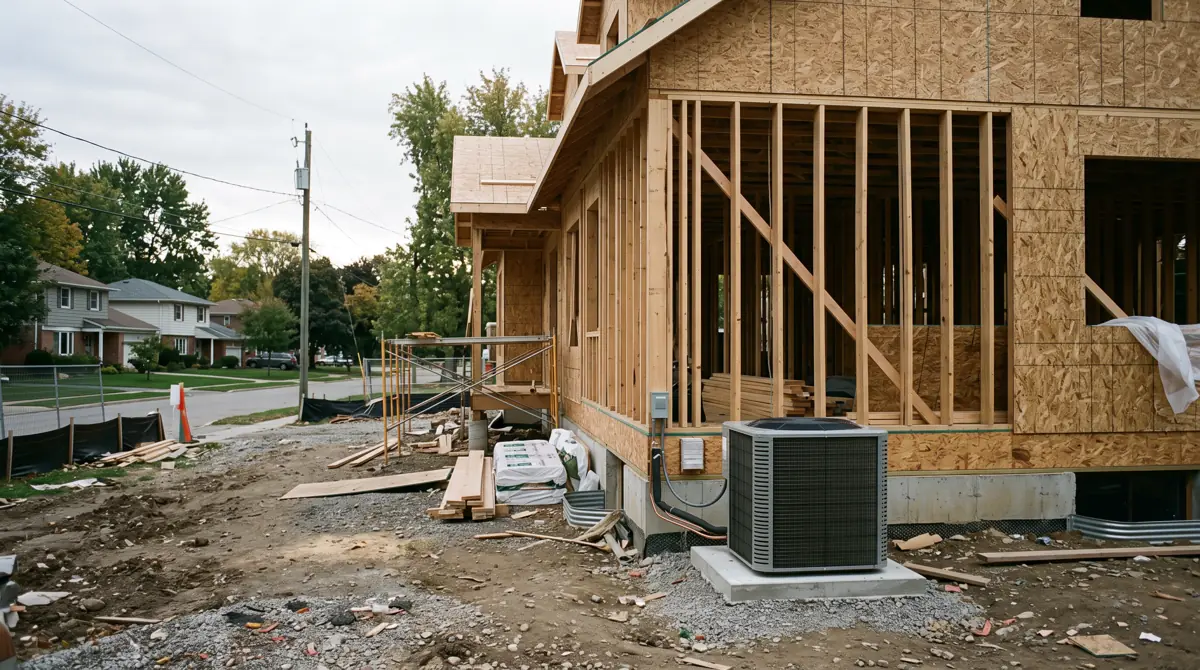
Which states are banning gas furnaces? In California it is air districts, not the state
No state law bans the sale of gas furnaces. The closest thing is a Bay Area emission standard that most gas furnaces cannot meet.
| Rule | Who it binds | What it does to gas furnaces or water heaters | Key date | Status on 2026-11-02 | Source |
|---|---|---|---|---|---|
| Bay Area Air District Rule 9-4 | Sale and installation in the San Francisco Bay Area air district | Zero-NOx standard for furnaces under 175,000 BTU/hr | Units made after 2029-01-01 | Adopted 2023; date unchanged | s9 |
| Bay Area Air District Rule 9-6 | Same | Zero-NOx standard for water heaters | Small tank units: proposed move to 2028-01-01; units above 75,000 BTU/hr to 2 million BTU/hr: proposed 2033 | Board hearing on the 2026 amendments set for 2026-11-04 | s9 |
| South Coast AQMD Rules 1111 and 1121 (proposed zero-emission amendments) | Southern California air district | Would have required zero-emission furnaces and small water heaters | Board vote 2025-06-06 | Rejected 7 to 5; earlier rule text stays in force | s10 |
| CARB zero-emission space and water heater standard | Statewide, California | Concept stage | FAQ updated 2026-07-13 | Not finalized; not yet proposed to the Board | s11 |
| DOE furnace and water heater efficiency standards | Nationwide | Efficiency minimums (not a fuel ban) | Supreme Court order 2026-06-08 | Judgment upholding the rules vacated and remanded to the D.C. Circuit | s13 |
Air district rules set emission standards at sale or replacement; they do not require removing working equipment.
Source: [9][10][11][13] Bay Area Air Quality Management District; South Coast Air Quality Management District; California Air Resources Board; Supreme Court of the United States
The Bay Area Air District's Rule 9-4 sets a zero-NOx standard for furnaces under 175,000 BTU/hr made after 2029-01-01, and the district states that it applies when a furnace is bought or replaced, not to working units. A board hearing on 2026-11-04 will consider moving the small water heater date under Rule 9-6 to 2028-01-01 and larger units to 2033; the furnace date is not in that proposal.
Southern California went the other way: South Coast AQMD's board voted 7 to 5 on 2025-06-06 not to adopt zero-emission furnace and water heater rules. The statewide CARB standard has not been proposed to its Board, according to CARB's FAQ updated 2026-07-13.
Washington voters tried to protect gas, and the state's top court threw the measure out
Initiative 2066 would have made Washington a preemption state. It never took effect.
Initiative 2066, approved in 2024, would have barred the state building code council and local governments from prohibiting or discouraging gas use. A King County Superior Court judge struck it down on 2025-03-21, and the Washington Supreme Court affirmed on 2026-09-17, holding it 'unconstitutional in its entirety' under the single-subject rule (No. 104240-0). We therefore code Washington as 'neither'.
No federal law bans gas furnaces, and federal agencies are pushing the other way
Federal rules set furnace efficiency minimums, and federal agencies in 2026 litigated against local gas bans.
No federal statute or rule bans gas furnaces or gas water heaters. DOE's efficiency standards for those products were challenged by gas groups as an effective ban on non-condensing units, and on 2026-06-08 the Supreme Court vacated the appeals court judgment upholding them and sent the case back (No. 25-879). A federal Energy Choice Act (H.R. 3699) cleared a House committee in December 2025 but is not law. Efficiency minimums and refrigerant rules are covered in our R-410A phase-out report; heat pump demand is in heat pump sales.
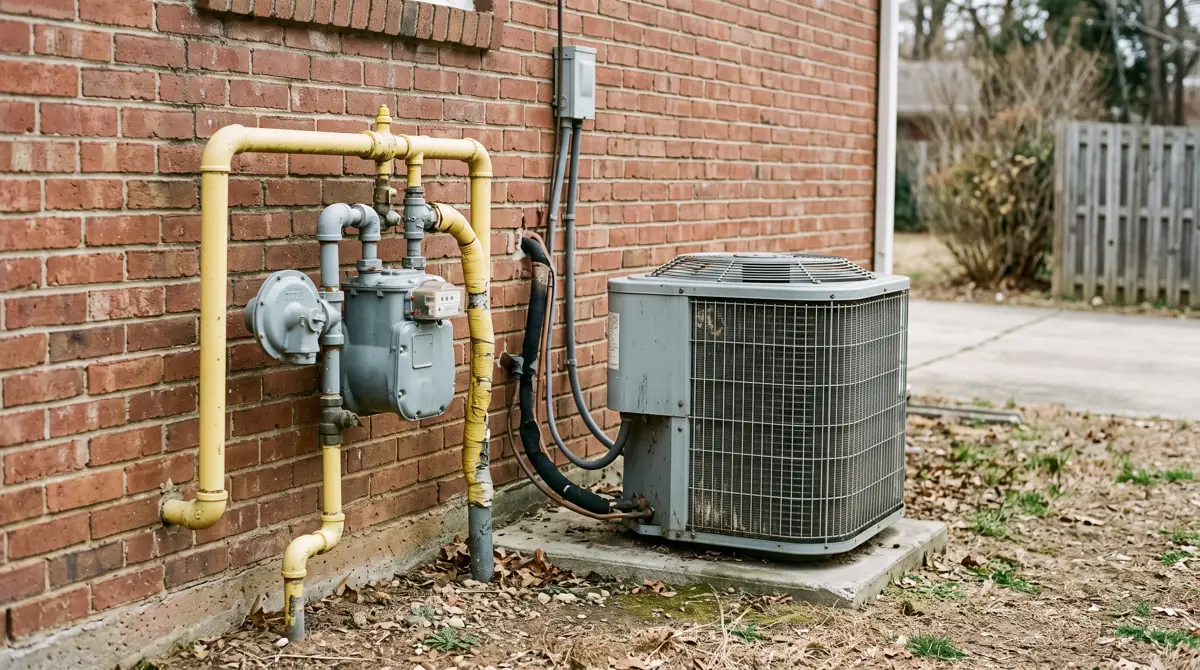
What the map means for a business that installs gas equipment
For most of the country, state law protects the gas hookup. The exposure is concentrated and dated.
- In the 27 preemption states, a city cannot ban the gas hookup; state law, not local politics, would have to change first.
- In New York, new low-rise construction is the exposed segment once the suspension ends; replacement work in existing buildings is outside the statute.
- In the Bay Area, replacement furnaces made after 2029-01-01 must meet the zero-NOx standard, which affects the replacement mix rather than new construction.
- Elsewhere, risk sits at the city or county level and has been shrinking in the Ninth Circuit since 2024.
Buyers reviewing an HVAC company often ask how much revenue depends on gas equipment and where; this registry gives a dated answer by state. Owners preparing for that conversation can start at our guide to selling an HVAC business.
Counts and distributions
Share of US residents in states that bar local gas bans (signature figure)
Formulasum(POPESTIMATE2025 for the 27 preemption states) / sum(POPESTIMATE2025 for 50 states plus DC) x 100
Inputs: fact rows 1 to 51 (Census Vintage 2025); registry.csv status column (fact sheet rows)
Result: 164,233,225 / 341,784,857 = 48.1%
Nearly half of US residents live where a city cannot ban a gas hookup. 5.9% live in New York, the only statewide all-electric state, and 46.1% live in the 23 jurisdictions with neither.
Limitations: Population is a proxy for exposure; it does not weight new construction or gas use. Four rows are coded 'interpretation needed'; dropping them gives 40.8%.
Preemption residents per all-electric resident
Formulapopulation of preemption states / population of New York
Inputs: d2; fact row 33 (fact sheet rows)
Result: 8.2 to 1
For every American under a statewide all-electric law, about eight live under a state ban on local gas bans.
Limitations: Changes if another state passes an all-electric law or a preemption law is repealed.
Peak year of preemption laws
Formulacount of registry rows by year enacted
Inputs: registry.csv (fact sheet rows)
Result: 15 laws in 2021, out of 27
The laws clustered in the two years after Berkeley's 2019 ordinance; since 2023 only Nebraska (2024) and Maine (2025) were added.
Limitations: Uses the year of the law we cite; Tennessee's 2022 law may have had a 2020 predecessor that we did not verify.
New York's suspension window
Formula2026-10-28 minus 2026-06-30
Inputs: fact rows 80, 82, 83 (fact sheet rows)
Result: 120 days
The stipulation tied the restart to the appeals decision, so the earliest restart date was 2026-10-28.
Limitations: The stipulation was read through a summary; a timely certiorari petition would extend the suspension.
Preemption laws that reach appliances
Formulacount of preemption rows whose text names appliances or heating systems
Inputs: registry.csv appliances column (fact sheet rows)
Result: 4 states
Most preemption laws protect the hookup or the fuel; Alabama, Maine, New Hampshire and North Carolina also protect the choice of equipment.
Limitations: Coded from statutory text; courts may read the hookup laws to cover appliances too.
Key findings
- 27 states have enacted laws that bar local governments from restricting gas service or energy sources, based on official texts checked 2026-11-02.[24][14][15][16][17][18][19]
- 15 of the 27 state preemption laws in this registry were enacted in 2021, the peak year; Maine's 2025 law (P.L. 2025, ch. 456) is the most recent.[24][22]
- The 27 preemption states had 164,233,225 residents on July 1, 2025, or 48.1% of the 341,784,857 people in the 50 states and DC.[1]
- New York, the only state with a statewide all-electric law, had 20,002,427 residents in 2025, or 5.9% of the US.[1][2]
- Texas (9.3% of US residents) and Florida (6.9%) are the two largest states that bar local gas bans, based on 2025 population.[1][17][18]
- New York's statute bars fossil-fuel equipment in new buildings of 7 stories or less, except commercial or industrial buildings over 100,000 square feet, and in all new buildings after 2028-12-31.[2]
- The Second Circuit held on 2026-06-30 that EPCA does not preempt New York's All-Electric Buildings Act or New York City's Local Law 154.[3]
- Under a 2025-11-12 stipulation, New York's rules stay suspended until 120 days after the Second Circuit decision unless a Supreme Court petition is filed, which pointed to 2026-10-28.[25][26]
- The Ninth Circuit held Berkeley's 2019 gas piping ban preempted in its amended 2024 opinion, and Los Angeles, Encinitas, Santa Cruz and San Luis Obispo later repealed or paused similar rules.[4][6]
- The Justice Department sued Morgan Hill and Petaluma on 2026-01-05 and dismissed the case on 2026-03-23 after both cities repealed or amended their rules.[6][7][29]
- The Bay Area Air District's zero-NOx standard covers furnaces under 175,000 BTU/hr made after 2029-01-01, and applies at replacement, not to working units.[9]
- South Coast AQMD's board voted 7 to 5 on 2025-06-06 not to adopt zero-emission rules for furnaces and water heaters.[10]
- The Washington Supreme Court struck down Initiative 2066, a 2024 measure that would have barred local and state restrictions on gas, on 2026-09-17.[5][33]
- 4 of the 27 preemption laws (Alabama, Maine, New Hampshire and North Carolina) also protect the choice of appliance or heating system, not only the utility hookup.[21][22][24]
Executive summary
- 27 states had a law on 2026-11-02 that stops cities or counties from banning gas service, energy sources or, in 4 states, the appliances themselves.
- New York's All-Electric Buildings Act is the only statewide all-electric law; it covers new buildings of 7 stories or less first and all new buildings after 2028-12-31.
- The Second Circuit upheld New York's law on 2026-06-30, which splits with the Ninth Circuit's 2024 Berkeley ruling; New York agreed to keep enforcement suspended while a Supreme Court petition remains possible.
- 48.1% of US residents live in preemption states, 5.9% live in New York, and 46.1% live in the 23 jurisdictions with neither (Census 2025).
- California has no statewide gas ban; the Bay Area Air District's zero-NOx furnace standard applies to furnaces made after 2029-01-01, while South Coast AQMD rejected its version 7 to 5 in 2025.
- No federal law bans gas furnaces; federal action in 2026 went the other way, with the Justice Department suing cities over local gas bans.
- Washington's 2024 voter initiative to protect gas was struck down in its entirety on 2026-09-17, so Washington is not counted as a preemption state.
Questions people ask
Which states are banning gas furnaces?
No state bans the sale of gas furnaces as of 2026-11-02. New York's law bars fossil-fuel equipment, including furnaces, in new buildings once its suspension ends, and the Bay Area Air District requires zero-NOx furnaces for units made after 2029-01-01 in its region of California.
Is there a federal ban on gas furnaces?
No. Federal rules set efficiency minimums, and the Supreme Court on 2026-06-08 vacated the appeals judgment upholding DOE's furnace and water heater standards. The Justice Department sued cities over local gas bans in 2026.
Which states prohibit natural gas bans?
27 states as of 2026-11-02: Alabama, Arizona, Arkansas, Florida, Georgia, Idaho, Indiana, Iowa, Kansas, Kentucky, Louisiana, Maine, Mississippi, Missouri, Montana, Nebraska, New Hampshire, North Carolina, North Dakota, Ohio, Oklahoma, South Dakota, Tennessee, Texas, Utah, West Virginia and Wyoming.
When does New York's gas ban start?
The statute set 2025-12-31 for new buildings of 7 stories or less and after 2028-12-31 for all new buildings. Enforcement was suspended in November 2025; under the stipulation it could restart from 2026-10-28 unless a Supreme Court petition is filed, and we could not confirm a restart on 2026-11-02.
Frequently asked questions
How many states prohibit local gas bans in 2026?
27 states, based on official statute and session-law texts checked on 2026-11-02.
What share of Americans live in those states?
48.1%, or 164,233,225 of 341,784,857 residents of the 50 states and DC, using Census Vintage 2025 estimates.
Does New York's law make me remove a gas furnace?
No. Energy Law 11-104(7) says the prohibition does not apply to buildings that existed before the effective date, including repair and continued use of gas equipment.
Is New York City's gas ban in effect?
Local Law 154's first phase has applied since 2024-01-01, and the Second Circuit upheld it on 2026-06-30.
What happened to Berkeley's gas ban?
The Ninth Circuit held it preempted by federal law (amended opinion 2024-01-02), and Berkeley agreed in a 2024 settlement to stop enforcing and repeal it.
Does California ban gas furnaces?
Not statewide. The Bay Area Air District's zero-NOx rule covers furnaces made after 2029-01-01 in its region, and South Coast AQMD rejected a similar rule 7 to 5 on 2025-06-06.
Is Washington a preemption state after Initiative 2066?
No. The Washington Supreme Court held the initiative unconstitutional in its entirety on 2026-09-17.
Which state passed the most recent law against gas bans?
Maine, through P.L. 2025, ch. 456, approved on 2025-07-01, which bars municipalities from prohibiting a heating or energy system of the owner's choice.
Are local gas bans still being challenged?
Yes. The Justice Department sued Morris Township, New Jersey in 2026, and the New York case could still reach the Supreme Court because of the split with the Ninth Circuit.
How often is this registry updated?
It was checked in full on 2026-11-02 and is scheduled for a recheck at least every three months and after major rulings.
Download the data
Every table in this report is available as a CSV under CC BY 4.0. The fact sheet lists each value with its source URL and access date.
- derived_metrics.csv (CSV)
- fact_sheet.csv (CSV)
- State gas law registry (CSV)
- t1_state_status.csv (CSV)
- t2_preemption_ranked.csv (CSV)
- t3_local_rules.csv (CSV)
- t4_appliance_rules.csv (CSV)
- t5_population_split.csv (CSV)
- t6_preemption_by_year.csv (CSV)
For journalists and researchers
If you cite only a few, cite these
- 27 states bar local gas bans; New York alone has a statewide all-electric law (HVAC Business Brokers Research Desk, checked 2026-11-02).[24][2]
- 48.1% of Americans live in states with laws against local gas bans (Census Vintage 2025).[1]
- For every resident under a statewide all-electric law, 8.2 live under a state ban on local gas bans (2025).[1]
Most quotable statistics
- 27 states had laws barring local gas bans as of November 2, 2026, according to the HVAC Business Brokers Research Desk registry of state statutes.[24]
- 48.1% of US residents lived in states that bar local gas bans in 2025, based on Census Vintage 2025 estimates.[1]
- New York was the only state with a statewide all-electric law for new buildings as of November 2026, and its enforcement was suspended pending a possible Supreme Court petition.[2][25][26]
- 15 of the 27 state laws against local gas bans were enacted in 2021.[24]
- The Second Circuit upheld New York's all-electric law on June 30, 2026, splitting with the Ninth Circuit's 2024 Berkeley decision.[3][4]
- The Bay Area Air District's zero-NOx standard applies to furnaces under 175,000 BTU/hr made after January 1, 2029.[9]
Press summary
A registry of state gas laws compiled by the HVAC Business Brokers Research Desk finds that 27 states had laws barring local governments from banning gas hookups or energy sources as of November 2, 2026, while New York was the only state with a statewide all-electric requirement for new buildings. Those 27 states held 48.1% of US residents in 2025, against 5.9% in New York, based on Census Vintage 2025 estimates. New York's law, upheld by the Second Circuit on June 30, 2026, remained under a court-approved enforcement suspension pending a possible Supreme Court petition. The registry also records the Washington Supreme Court's September 2026 ruling striking down a voter initiative that would have protected gas, the Bay Area Air District's zero-NOx standard for furnaces made after 2029, and federal lawsuits against city gas bans in California and New Jersey. Every state row carries a statute citation, a link to the official text and a confidence rating.
Suggested headlines
- 27 states now block local gas bans; only New York requires all-electric new buildings
- Nearly half of Americans live where cities cannot ban gas hookups
- New York's gas ban survives appeal but waits on the Supreme Court clock
- Washington's top court strikes down voter measure protecting natural gas
- No state bans gas furnaces outright; Bay Area air rule starts with 2029 models
How to cite this report
HVAC Business Brokers. (2026). Gas Appliance Bans by State: Where New Buildings Must Go Electric and Where Bans Are Prohibited (2026). Retrieved from https://sell-my-hvac-business.com/research/gas-appliance-bans-by-state/
Reuse license
Data and tables are licensed CC BY 4.0. Attribution: “Source: HVAC Business Brokers, Gas Appliance Bans by State: Where New Buildings Must Go Electric and Where Bans Are Prohibited (2026)” with a link to this page.
Reproduce this analysis
Every figure comes from the files below. The scripts that pulled and computed them are kept with the report and can be re-run.
| Dataset | Publisher | Source | Query or filter | Rows used | Retrieved |
|---|---|---|---|---|---|
| Vintage 2025 state population totals (NST-EST2025-ALLDATA) | U.S. Census Bureau | File or endpoint | SUMLEV = 040 rows for 50 states plus DC; column POPESTIMATE2025; SUMLEV 010 row as a check | 51 jurisdiction rows used; Puerto Rico, region and division rows dropped | 2026-11-02 |
| State statutes, session laws and enrolled bills (27 preemption states, New York) | State legislatures | File or endpoint | One official text per state; URL per row in tables/registry.csv | 28 state laws coded; 23 jurisdictions coded 'neither' | 2026-11-02 |
| Court opinions and dockets (Second Circuit, Ninth Circuit, Washington Supreme Court, U.S. Supreme Court, N.D. Cal.) | Federal and state courts | File or endpoint | Opinions read in full for holdings and dates; Supreme Court docket search by party name | 8 rulings or filings in the timeline | 2026-11-02 |
| Air district and CARB appliance rule pages | BAAQMD, South Coast AQMD, CARB | File or endpoint | Compliance dates, size thresholds and board actions | 4 rules | 2026-11-02 |
Data quality and exclusions
- Washington removed from the preemption count: Initiative 2066 was struck down on 2026-09-17 and never took effect (1 state).
- Indiana kept in the count with confidence 'interpretation needed': the enrolled act could not be opened on iga.in.gov, and enactment rests on a bill tracker showing Public Law 180 (1 state). The sensitivity figure drops it with Alabama, Georgia and New Hampshire.
- Tennessee coded from its 2022 Public Chapter 1100; a 2020 law reported by trade press was not verified and is not used for the year count.
- Puerto Rico and the Census region and division rows were dropped from the population file; the 51 jurisdiction rows sum exactly to the national total of 341,784,857.
- Local ordinances are a selected list of rules with a court case, federal suit, repeal or state authorization on record; we did not attempt a full count of local ordinances.
Methodology
Scope. We coded every state and DC on one question each: does a state law stop local governments from banning gas or energy sources (preemption), does a state law require new buildings to be all-electric, or neither. Building codes that favor heat pumps, utility planning rules and incentive programs are not counted as bans. Proposals, vetoed bills and voter measures struck down by courts are not counted.
Evidence. Each counted law was read on the legislature's or code publisher's official site, or an Internet Archive copy of that official page when the live site blocked automated requests, and saved in raw/src. Trade association and news counts (NPGA, Stateline) were used only to find candidate states and to cross-check the total. Court rulings come from the courts' opinions where available and from law firm or news reports (Tier 3) where the order itself was not opened; those rows say so.
Confidence. 'Clear text' means the operative language and the enactment were both read in official text. 'Interpretation needed' means one of the two rests on a summary, an enrolled bill without an act number, or a Tier 3 tracker (Alabama, Georgia, Indiana, New Hampshire and New York's current enforcement status). 'Not found' rows are listed in excluded.md.
Population. Shares use the Census Bureau's Vintage 2025 state totals (POPESTIMATE2025, file dated 2026-01-27) for the 50 states and DC; Puerto Rico is excluded. Derived figures are in derived_metrics.csv and are rebuilt by scripts/build.py.
Conflicts. Where sources gave different dates for the end of New York's suspension, we used the stipulation terms as summarized by the Association of Towns (120 days after the Second Circuit decision) and report the resulting date, 2026-10-28, as conditional.
Last update: 2026-11-02. The next full check is due by 2027-02-01 or after any Supreme Court filing in the New York case. Owners who want a valuation can use the form at /#valuation; it plays no part in this research.
This report presents published data with its limitations. It is not legal, financial or investment advice.
Sources, ranked by quality
Tier 1: primary and official sources (24)
- [1] U.S. Census Bureau. Vintage 2025 state population totals (NST-EST2025-ALLDATA, file dated 2026-01-27). July 1, 2025. Accessed 2026-11-02.
- [2] New York State Senate. N.Y. Energy Law 11-104 (Internet Archive copy of the official page). Current law. Accessed 2026-11-02.
- [3] U.S. Court of Appeals for the Second Circuit. Ass'n of Contracting Plumbers of the City of New York v. City of New York, Nos. 25-977, 25-2041 (opinion, copy). June 30, 2026. Accessed 2026-11-02.
- [4] U.S. Court of Appeals for the Ninth Circuit. California Restaurant Ass'n v. City of Berkeley, No. 21-16278 (amended opinion). January 2, 2024. Accessed 2026-11-02.
- [5] Supreme Court of the State of Washington. Climate Solutions v. State of Washington, No. 104240-0. September 17, 2026. Accessed 2026-11-02.
- [6] U.S. Department of Justice. Justice Department Sues California Cities Over Natural Gas Bans (press release and complaint). January 2026. Accessed 2026-11-02.
- [7] U.S. Department of Justice. Notice of voluntary dismissal, United States v. City of Morgan Hill, No. 5:26-cv-00056-BLF (RECAP copy). March 23, 2026. Accessed 2026-11-02.
- [8] U.S. Department of Justice. Justice Department Sues New Jersey Township Over Natural Gas Ban. April 1, 2026. Accessed 2026-11-02.
- [9] Bay Area Air Quality Management District. Rules 9-4 and 9-6 Building Appliances (rule development page) and Myths vs. Facts sheet (Oct. 2026). 2023 to 2026. Accessed 2026-11-02.
- [10] South Coast Air Quality Management District. Proposed Amended Rule 1111 and Proposed Amended Rule 1121. June 6, 2025. Accessed 2026-11-02.
- [11] California Air Resources Board. Clean Space and Water Heaters FAQ (updated July 13, 2026). 2026. Accessed 2026-11-02.
- [12] Massachusetts Department of Energy Resources. Municipal Fossil Fuel Free Building Demonstration Project (Internet Archive copy). 2022 to 2025. Accessed 2026-11-02.
- [13] Supreme Court of the United States. Docket No. 25-879, American Gas Association v. Department of Energy; docket search for the New York case parties. 2026. Accessed 2026-11-02.
- [14] Arizona Legislature. Arizona Laws 2020, ch. 3 (HB 2686). 2020. Accessed 2026-11-02.
- [15] Louisiana State Legislature. La. R.S. 40:1730.21.1 and SB 492 (2020) bill record. 2020. Accessed 2026-11-02.
- [16] Oklahoma Legislature. Oklahoma Statutes Title 11 (11 O.S. 14-107). 2020. Accessed 2026-11-02.
- [17] Texas Legislature. Texas HB 17 (87th Leg.) enrolled text and history. 2021. Accessed 2026-11-02.
- [18] Florida Legislature. Fla. Stat. 366.032. 2021 to 2025. Accessed 2026-11-02.
- [19] Ohio Legislative Service Commission. Ohio Rev. Code 4933.41 (Internet Archive copy). 2021. Accessed 2026-11-02.
- [20] Georgia General Assembly, Office of Legislative Counsel. Summary of General Statutes Enacted, 2021 (Act 254, HB 150; O.C.G.A. 46-1-6). 2021. Accessed 2026-11-02.
- [21] North Carolina General Assembly. N.C.G.S. 153A-145.11 and S.L. 2023-58 (Internet Archive copies). 2023. Accessed 2026-11-02.
- [22] Maine Legislature. P.L. 2025, ch. 456 (LD 556), 30-A M.R.S. 3015. 2025. Accessed 2026-11-02.
- [23] Nebraska Legislature. Neb. Rev. Stat. 13-407 (Internet Archive copy). 2024. Accessed 2026-11-02.
- [24] State legislatures (URL per row in registry.csv). State statute and session-law texts for the other preemption states (AL, AR, IA, ID, KS, KY, MO, MS, MT, ND, NH, SD, TN, UT, WV, WY). 2021 to 2024. Accessed 2026-11-02.
Tier 2: trade bodies, market research, company data (1)
- [25] Association of Towns of the State of New York. Update for Town Officials: Delay of the All-Electric Buildings Act (Nov. 2025). November 2025. Accessed 2026-11-02.
Tier 3: journalism and expert commentary (10)
- [26] Barclay Damon LLP. Petition for Rehearing Denied by Second Circuit for New York City and State Bans on Gas Appliances in New Buildings. 2026. Accessed 2026-11-02.
- [27] K&L Gates LLP. Natural Gas Bans: From New York to Washington, Courts Shift the Landscape on Legality of State and Local Gas Bans. April 7, 2025. Accessed 2026-11-02.
- [28] Bloomberg Law. Maryland County's All-Electric Building Mandate Upheld by Judge. March 25, 2026. Accessed 2026-11-02.
- [29] E&E News. DOJ drops lawsuits after 2 California cities repeal gas appliance bans. March 24, 2026. Accessed 2026-11-02.
- [30] National Propane Gas Association. Maine protects energy choice. July 2025. Accessed 2026-11-02.
- [31] Facilities Dive. House bill barring state, local gas appliance bans clears hurdle. December 5, 2025. Accessed 2026-11-02.
- [32] Stateline. New York to ban fossil fuels in new buildings. 23 states have forbidden such bans. (Internet Archive copy). May 3, 2023. Accessed 2026-11-02.
- [33] Washington State Standard. WA high court tosses natural gas measure approved by voters (Internet Archive copy). September 17, 2026. Accessed 2026-11-02.
- [34] California Restaurant Association. California Restaurant Association and Berkeley Settle Gas Ban Lawsuit. 2024. Accessed 2026-11-02.
- [35] FastDemocracy (bill tracker). Indiana HB 1191 (2021) bill record. 2021. Accessed 2026-11-02.